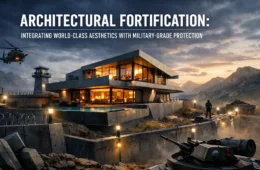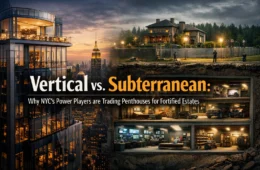

Engineered Systems designed to meet your preservation needs.
The convergence of geopolitical volatility and advanced architectural engineering has shifted the demand for high-net-worth individual (HNWI) security from standard panic rooms to comprehensive, long-term luxury underground shelters. For the modern estate owner, a fallout shelter is not merely a basement fortification but a sophisticated subterranean habitat requiring precision engineering, life-support redundancy, and hardened security protocols to ensure continuity of life and assets. However, many luxury builds fail by prioritizing aesthetic opulence over functional survivability, resulting in critical vulnerabilities that compromise the safety of the occupants. Bunkers of Texas mitigates these risks by implementing industrial-grade engineered systems that treat underground survival as a technical challenge rather than a residential renovation, delivering a seamless integration of luxury and absolute security.
Mistake 1: Prioritizing Aesthetics Over Air Filtration Integrity
High-Net-Worth Individuals often treat the bunker as an extension of their interior design portfolio, selecting vents and ducting based on visual minimalism rather than atmospheric scrubbing capabilities. A common failure is the installation of standard residential HVAC systems that lack the positive pressure and multi-stage filtration required to exclude radioactive particulates or biological agents.
Challenges:
- Infiltration of sub-micron radioactive fallout through standard HEPA filters.
- Carbon dioxide (CO2) buildup in sealed environments leading to cognitive decline.
- Lack of positive pressure seals, allowing external contaminants to enter during pressure shifts.
Solutions:
- Integrated military-grade NBC (Nuclear, Biological, Chemical) filtration systems featuring automated air monitoring.
- Deployed regenerative CO2 scrubbers to maintain atmospheric stability for extended durations.
- Conducted differential pressure testing to ensure the shelter maintains a constant positive pressure relative to the surface.

Mistake 2: Single-Point-of-Failure Power Infrastructure
Many luxury bunkers rely on a single primary generator or a standard connection to the municipal grid without adequate EMP (Electromagnetic Pulse) protection. For an HNWI, the loss of power is not just a loss of lighting; it is the failure of the air filtration, water purification, and security monitoring systems.
Challenges:
- Vulnerability of electronic control systems to E1 and E2 pulses from high-altitude nuclear detonations.
- Fuel degradation in long-term storage, rendering diesel generators useless after 12–18 months.
- Excessive thermal signatures and noise from surface-level exhaust, revealing the shelter's location.
Solutions:
- Architected redundant micro-grids incorporating solar arrays, hardened battery banks, and multi-fuel generators.
- Encased all critical power electronics in Faradic cages to ensure EMP resilience.
- Implemented deep-well geothermal cooling and subterranean exhaust dispersal systems to mask thermal and acoustic signatures.
Mistake 3: Inadequate Water Resource Management and Recycling
Standard luxury builds often rely on large storage tanks without a sustainable replenishment or purification strategy. In a long-term fallout scenario, static water supplies are a finite resource that can become a point of catastrophic failure if contaminated or exhausted.
Challenges:
- Stagnation and bacterial growth in large-scale storage vessels.
- Dependence on surface-fed municipal water lines that are vulnerable to sabotage or contamination.
- Inefficient waste-water management leading to environmental toxicity within the shelter.
Solutions:
- Drilled dedicated artesian wells with subterranean pump systems protected from surface contamination.
- Installed closed-loop greywater recycling systems to extend the lifespan of onboard water supplies.
- Utilized UV-C sterilization and reverse osmosis filtration stages to maintain potable water standards exceeding EPA requirements.

Mistake 4: Security Gaps in Entry and Exit Protocols
A bunker’s security is only as strong as its weakest ingress point. HNWIs often invest in heavy blast doors but neglect the "soft" entry points, such as ventilation shafts, emergency egress hatches, or the psychological vulnerability of the entry sequence itself.
Challenges:
- Lack of a multi-stage "airlock" or decontamination zone, allowing contaminants to follow occupants inside.
- Vulnerability to "breach and clear" tactics at secondary exit points.
- Inadequate biometric integration, relying on physical keys or codes that can be coerced or stolen.
Solutions:
- Constructed hardened multi-chamber entryways with automated decontamination showers.
- Deployed concealed, ballistic-rated emergency egress systems disguised within the estate's natural landscape.
- Integrated zero-trust security protocols requiring multi-factor biometric authentication for all internal and external hatches.
Mistake 5: Neglecting Psychological Endurance and Circadian Design
Living underground for weeks or months presents significant psychological challenges. Many luxury shelters are designed as "boxes," which, despite their expensive finishes, lead to "cabin fever," sleep disturbances, and cognitive friction among family members.
Challenges:
- Absence of natural light cycles leading to the disruption of the circadian rhythm.
- Static acoustic environments that emphasize mechanical hums, increasing stress levels.
- Cramped communal spaces that do not allow for privacy or "zone" separation.
Solutions:
- Implemented circadian LED lighting systems that mimic the shifting color temperature of the natural sun.
- Designed acoustic dampening zones and used digital "virtual windows" to provide visual depth and environmental simulation.
- Structured the shelter layout to include private suites and distinct communal areas, facilitating long-term social cohesion.

Mistake 6: Failure to Conduct Hydrological and Geotechnical Surveys
High-end real estate is often located in coastal or mountainous regions where soil conditions are not naturally conducive to deep subterranean construction. Skipping a rigorous geotechnical analysis can lead to structural shifting, flooding, or bunker "buoyancy" (where the bunker shifts upward due to groundwater pressure).
Challenges:
- Hydrostatic pressure causing cracks in the concrete envelope.
- Radon gas infiltration from the surrounding soil.
- Soil acidity corroding the protective coatings of the shelter over time.
Solutions:
- Conducted comprehensive site-specific hydrological surveys before excavation.
- Utilized high-strength, waterproofed volcanic-concrete admixtures and external membrane barriers.
- Installed active radon mitigation systems and cathodic protection to prevent soil-based corrosion.
Mistake 7: Hiring General Contractors Instead of Specialized Defense Engineers
The most frequent mistake is treating a fallout shelter as a standard basement addition. General contractors, while skilled in residential luxury, often lack the specialized knowledge required for blast physics, NBC shielding, and the complex engineering of life-support systems.
Challenges:
- Miscalculation of blast load requirements for structural supports.
- Improper installation of blast valves, leading to lung overpressure during a shockwave.
- Lack of comprehensive documentation and maintenance manuals for complex mechanical systems.
Solutions:
- Engaged specialized defense engineers and security consultants for every phase of design and build.
- Conducted rigorous post-construction stress testing on all life-support and structural components.
- Provided the client with a full "as-built" technical dossier and a 24/7 priority maintenance agreement.

Summary of Engineered Solutions
To fix the errors common in luxury bunker design, the focus must shift from "decoration" to "preservation." Bunkers of Texas provides the technical expertise required to ensure that your subterranean asset performs under the most extreme conditions.
| System Category | Standard Luxury Approach (Mistake) | Bunkers of Texas Approach (Solution) |
|---|---|---|
| Air | Residential HEPA / HVAC | Multi-stage NBC Scrubbing / Positive Pressure |
| Power | Single Generator / Grid-tied | EMP-Hardened Micro-grid / Redundant Storage |
| Water | Static Storage Tanks | Artesian Well / Closed-loop Recycling |
| Structure | Standard Reinforced Concrete | High-PSI Waterproofed / Blast-Rated Shell |
| Security | Single-Point Access | Multi-chamber Airlocks / Zero-Trust Biometrics |
Effective survival is a result of meticulous planning and superior engineering. To explore how our team can architect a custom preservation solution for your estate, visit our About Us page or review our frequently asked questions.
Consultation and Design Services
Bunkers of Texas offers comprehensive design-build services for HNWIs who require more than just a shelter. We provide custom engineering for those who demand the highest standards of safety, privacy, and luxury. For a confidential assessment of your property’s suitability for a hardened subterranean facility, contact our engineering department for a free consultation.