
Engineered in the USA. Built for the World.
High Net Worth Individuals (HNWIs) and ultra-wealthy families are increasingly pivoting from traditional gated estate security to comprehensive subterranean infrastructure to mitigate escalating geopolitical, environmental, and technological risks. This strategic shift necessitates a sophisticated convergence of high-end architectural design and rigorous defensive engineering, requiring nationwide logistical capabilities that prioritize absolute operational security and discreet deployment. By integrating SCIF-compliant communication hubs, advanced life-support systems, and luxury residential amenities, Bunkers Of Texas facilitates a seamless transition from surface-level vulnerability to hardened, long-term subterranean autonomy, ensuring both physical safety and the preservation of lifestyle continuity across any geographic location in the United States.
Overview: The Evolution of Private Fortification
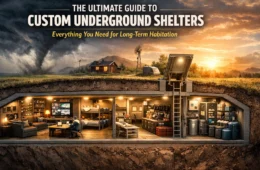
The modern luxury bunker has transcended the "fallout shelter" tropes of the 20th century. Today, the demand is driven by a desire for "apocalypse insurance": a term coined by industry leaders to describe high-tech, underground compounds that serve as both a primary residence alternative and a secure sanctuary. Recent data suggests that nearly 50% of Silicon Valley’s elite have invested in some form of "survival insurance," ranging from remote estates in New Zealand to massive subterranean complexes in the American heartland.
For the modern HNWI, privacy is the ultimate currency. The goal is no longer just surviving a catastrophe but maintaining a standard of living that includes gourmet kitchens, fitness suites, and high-speed, secure data connectivity. These compounds are being designed as "Sentinel systems," capable of operating independently of the grid for months or even years at a time.

Challenges: Maintaining Confidentiality in a Transparent World
Building a multi-thousand-square-foot underground facility presents unique logistical and security challenges, particularly regarding the preservation of the client’s anonymity.
- Visual Signatures during Construction: Large-scale excavation typically attracts attention from neighbors, local media, and satellite imagery.
- Supply Chain Integrity: Sourcing specialized materials, such as blast-rated doors and NBC (Nuclear, Biological, Chemical) filtration systems, without creating a paper trail that links to the HNWI.
- Personnel Vetting: Ensuring that every contractor, engineer, and laborer on-site is cleared through rigorous background checks to prevent internal security leaks.
- Permitting and Compliance: Navigating local building codes and service-sitemap.xml requirements while maintaining the "discreet" nature of the project.
- Geographic Constraints: Adapting structural engineering to various soil types, from the expansive clays of Texas to the rocky terrain of the Pacific Northwest, without compromising the stealth of the operation.
Solutions: The Discreet Subterranean Framework
To address these challenges, a modular and highly controlled construction methodology is employed. This ensures that the project remains confidential from inception to completion, regardless of the site’s location.
- Implemented Non-Descript Logistics: Utilized unmarked transport vehicles and specialized shipping containers to move sensitive components, ensuring that onlookers and casual observers cannot identify the nature of the construction.
- Deployed Proprietary Excavation Techniques: Employed rapid-dig technology and sound-dampening barriers to minimize the acoustic and visual footprint of the site, often masking the project as routine utility or pool installation.
- Secured Supply Chains: Established a closed-loop procurement process where critical components are sourced through intermediary entities, severing the direct link between the HNWI and the security infrastructure.
- Hardened Structural Integrity: Integrated reinforced concrete and ballistic-grade steel hulls designed to withstand seismic events and surface-level impacts, providing a baseline of physical security that exceeds federal SCIF standards.
- Executed Tiered Access Control: Established "Zero-Trust" protocols during the build phase, where workers are only granted access to specific zones, ensuring no single individual has a complete understanding of the compound’s layout or exit points.

Technical Specifications: Life Support and Connectivity
A subterranean compound is only as effective as its internal systems. For HNWIs who must continue to manage global portfolios and enterprises from a secure location, the technical requirements are non-negotiable.
Advanced Air and Water Purification
Reliability in life support is achieved through redundant, industrial-grade systems. High-capacity HEPA and NBC filtration towers ensure that the air supply remains free of pathogens, radiation, and chemical agents. Simultaneously, multi-stage ultra-purification systems, including UV sterilization and reverse osmosis, provide a continuous supply of potable water from dedicated on-site wells.
Power Autonomy and Management
Redundancy is the core philosophy. Systems are typically powered by a combination of hardened solar arrays (if surface conditions permit), high-capacity battery banks, and muffled diesel generators with enough fuel storage for 12 months of operation. All power distribution is managed through a central utility control room, allowing for real-time monitoring of consumption and system health.

Digital Privacy and SCIF Environments
For the HNWI, a bunker must also function as a secure command center. This includes the construction of SCIF-compliant rooms: Sensitive Compartmented Information Facilities: that prevent electronic eavesdropping and signal leakage. Deep packet inspection and hardware-level firewalls ensure that the compound’s internal network remains isolated from external threats while maintaining high-speed satellite uplinks for encrypted communication.
Discreet Construction: The Art of the "Invisible" Build
The primary concern for nationwide HNWIs is the "how" of building a bunker without the world knowing. The process begins with a clandestine site assessment. Engineers evaluate the topography and geology using ground-penetrating radar to map the area without breaking ground.

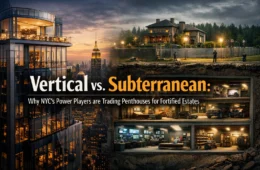
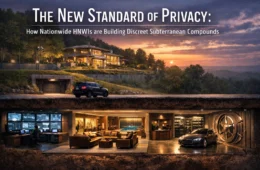
Once the project enters the construction phase, the site is often shrouded in "decoy" structures. In many cases, a traditional luxury home is built simultaneously on the surface, serving as both a functional residence and a "mask" for the massive subterranean works occurring beneath it. This allows for the movement of materials and personnel to be justified under the guise of a standard high-end residential build.
Luxury Integration: The Subterranean Lifestyle
Modern compounds are designed to prevent the psychological effects of long-term confinement. This is achieved through the integration of wellness and entertainment amenities that mirror the world's finest resorts.
- Simulated Environments: Installed high-definition "virtual windows" and circadian lighting systems that replicate natural sunlight and weather patterns, maintaining the residents' biological rhythms.
- Hydroponic Gardens: Integrated automated vertical farming units to provide fresh produce, contributing to both nutritional health and psychological well-being.
- Fitness and Wellness Suites: Deployed full-scale gymnasiums, spas, and indoor pools, ensuring that physical health can be maintained regardless of surface conditions.
- Entertainment Hubs: Constructed acoustic-treated theaters and lounges, utilizing premium finishes like marble and exotic woods to remove any "industrial" feel from the living spaces.

Nationwide Deployment and Logistics
While the brand is rooted in Texas engineering, the ability to build nationwide is a critical differentiator. Whether the client is located in the Hamptons, the hills of Malibu, or the plains of Kansas, the logistical framework remains the same.
The process involves a centralized engineering team at bunkersoftexas.com that coordinates with a rotating roster of vetted regional specialists. This "hub and spoke" model allows for the deployment of specialized equipment and personnel to any location in the US, maintaining the same standards of "Engineered in the USA. Built for the World."
Detailed portfolio-sitemap.xml entries demonstrate the versatility of these builds, showcasing successful implementations in diverse climates and regulatory environments. By centralizing the management of these complex projects, HNWIs are provided with a single point of accountability, ensuring that the project stays on schedule, on budget, and: most importantly: completely private.
Conclusion: The Future of High-End Privacy
The trend of building discreet subterranean compounds is no longer a fringe movement; it is the new standard of privacy and security for those with the means to protect their legacy. As global volatility increases, the value of a fixed, hardened, and invisible asset becomes immeasurable. By combining the clinical precision of defensive engineering with the bespoke luxury of high-end residential design, these compounds provide the ultimate peace of mind. In an uncertain world, the most significant luxury is the ability to control one's environment, entirely out of sight and out of reach.